
AI Vision Earbuds: A System-Level Benchmark Case Taking Wearable Interaction from “Hearing” to “Seeing”
Project Overview
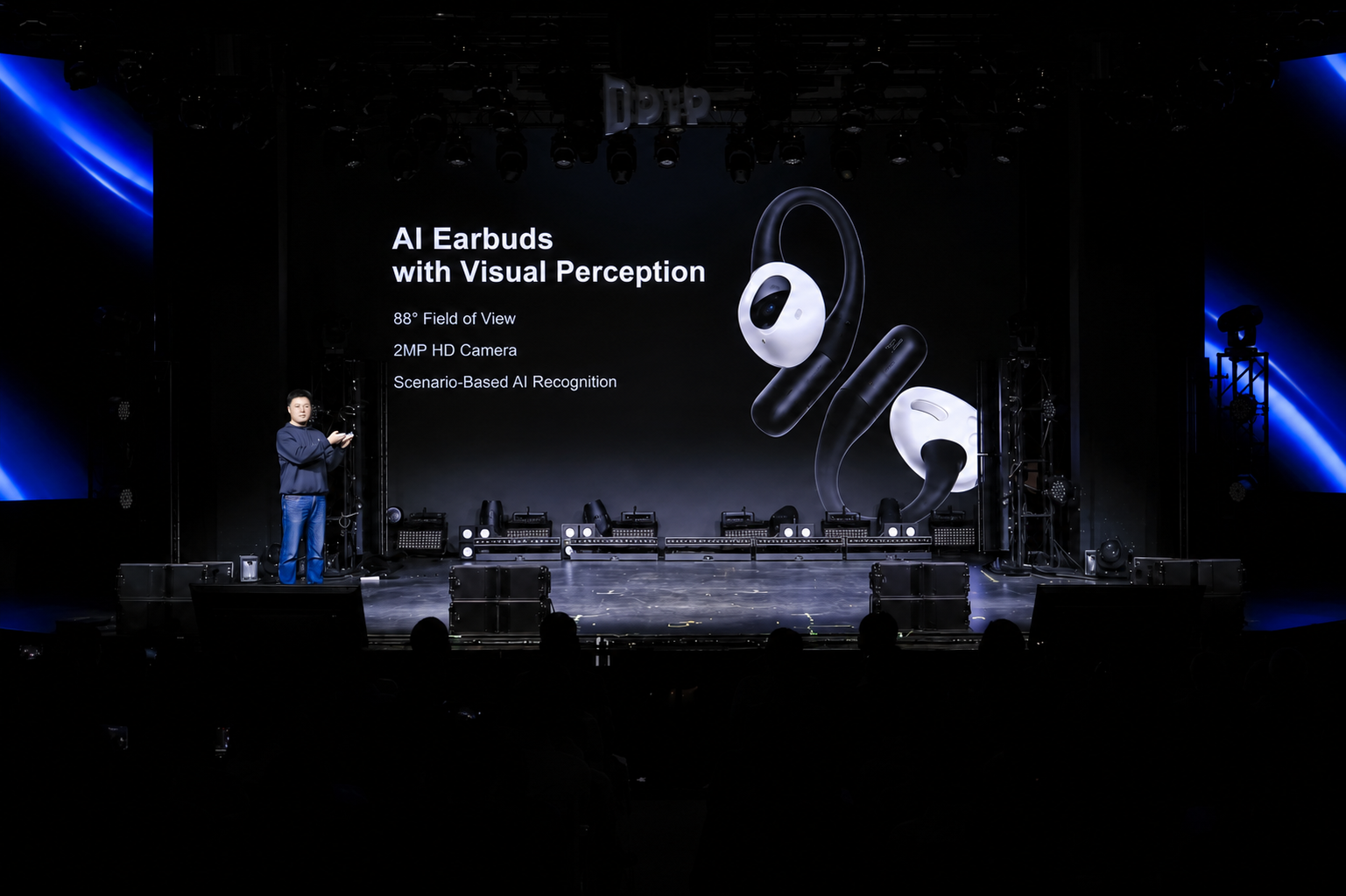
On December 23, 2025, the world’s first proactive AI earbuds with visual perception were officially released. As the visual system partner for the project, Kickers.ai provided a dual-camera vision system for both earbuds, enabling stable, mass-producible vision capability integration within an extremely compact form factor. This allows the device to move beyond voice interaction and gain visual awareness of the user’s real-world context. As AI evolves from “understanding speech” to “understanding sight”, human-computer interaction is entering its true next-generation form. With the “proactive environment-aware AI earbuds + watch” combination as a collaborative entry point, AI moves from passive response to proactive service based on real-world scenarios, opening a new chapter of multimodal, context-aware interaction.
Industry Pain Points
- Traditional AI earbuds only support auditory interaction and lack visual perception, so AI can only respond passively and struggles to understand real scenarios and ambiguous intent;
- The structural space of earbuds is extremely limited, while conventional camera modules are bulky and power-hungry, making it difficult to integrate vision without sacrificing wearing comfort;
- Wearable vision solutions commonly face four challenges: insufficient space, overly thick modules, unstable image quality, and high mass-production difficulty;
- Vision capabilities mostly stay at the “usable” level, falling short of the strict requirements of high-frequency interaction scenarios such as payment scanning and information retrieval in terms of image quality, power consumption, and response speed.
Solution: Full-Stack Vision System Capabilities of Kickers.ai
Relying on core strengths in optical design, camera modules, edge AI algorithms, ISP system tuning, and complete machine engineering integration, Kickers.ai builds a closed loop of “Hardware Customization → Algorithm Adaptation → System Tuning → Engineering Implementation → Mass Production Stability”. Through in-depth co-creation with an industry partner, it reconstructs the wearable vision architecture within the extreme structural constraints of earbuds, balancing image quality, power consumption, and wearing experience. The camera is no longer a simple photo-taking component but a key entry point for environment understanding and context awareness, greatly lowering the threshold for deploying vision capabilities on new wearable terminals.
Benchmark Practice: Dual-Camera Vision System AI Full-Perception Wearable
As a system-level partner, Kickers.ai deeply participated in the whole R&D process and overcame multiple technical and experience challenges in wearable scenarios:
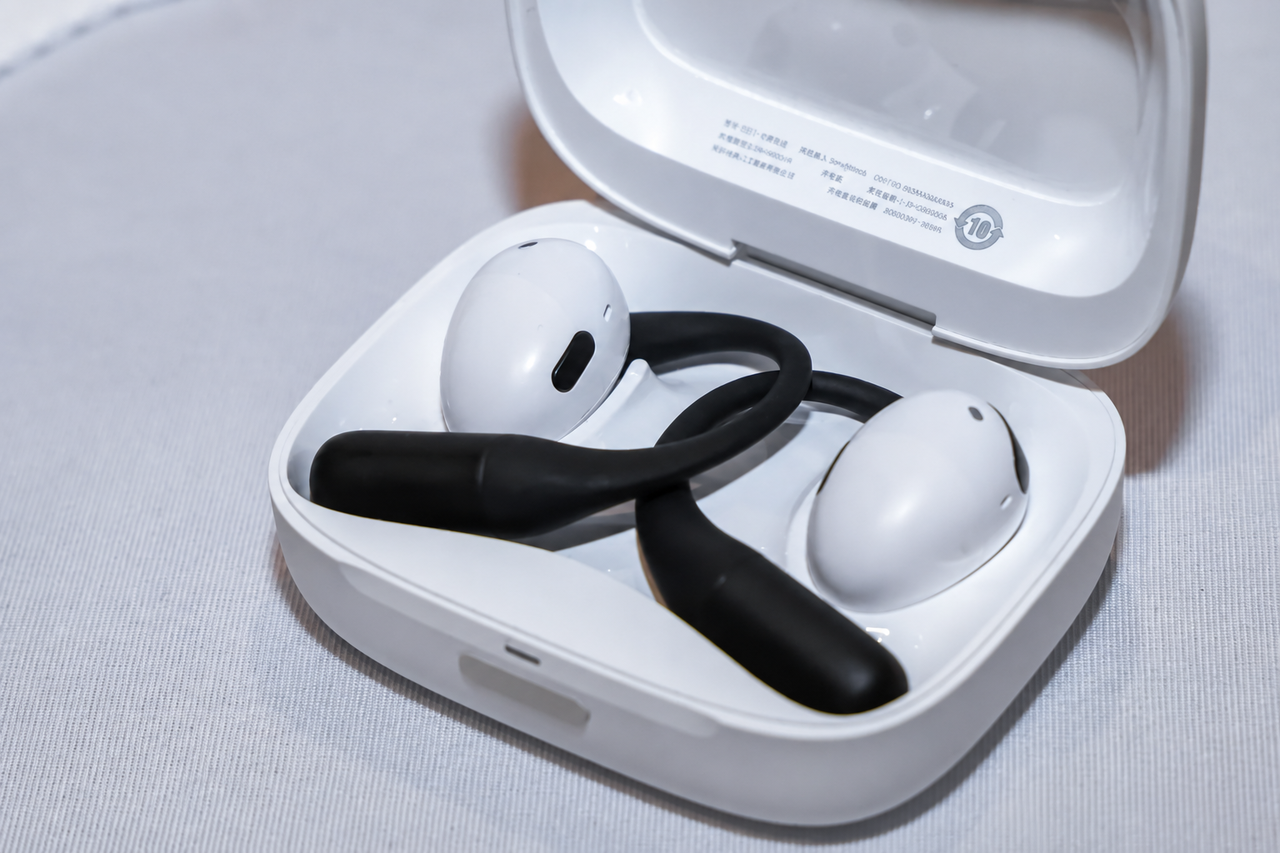
- Ultra-compact dual-camera module: A 2-megapixel sensor with an effective resolution of 1600 × 1200 and a pixel size of 1.75μm, in an overall module size of only 8 × 10.31 × 4.01 mm, achieving an optimized balance among power consumption, image quality, and structural space;
- Integrated ISP and code-scanning capability: Supports high-quality still imaging, low-power dynamic capture, and fast response, meeting high-frequency interaction scenarios such as payment and information retrieval;
- Multimodal intent understanding entry: By fusing visual, voice, and other multimodal information, the AI earbuds can accurately interpret user intent. Even with ambiguous commands, they can rely on real-time imagery to complete object recognition, task planning, and service invocation;
- Collaborative entry ecosystem: With the “proactive environment-aware AI earbuds + watch” combination, AI moves from passive response to proactive service based on real scenarios, pushing interaction from “hearing” to “seeing”.
From an Engineer's Perspective: Technical Decision-Making & Project Stories
I. Project Background: Why We Gave Earbuds “Eyes”
As a vision engineering team, we often face the question: “Voice interaction is enough for earbuds — why integrate cameras?”
The project targeted the core proposition of next-generation interaction from the very beginning:
To break AI's “hearing-only” limitation and equip it with environment understanding based on real scenarios;
To fit a stable, mass-producible dual-camera vision system into the millimeter-level structural space of earbuds;
To balance image quality, power consumption, response speed, and wearing comfort, supporting high-frequency interactions such as payment and information retrieval;
To use vision as the entry point for multimodal intent understanding and redefine the form of proactive AI wearables.
For the team, this was not about adding a camera to earbuds, but architecture reconstruction of wearable vision systems and engineering breakthroughs in extreme space constraints.
II. Technical Challenges & Engineering Decision Stories
Integration in Extreme Space: Three Core Technical Breakthroughs of the Smart Wearable Solution
Wearable forms such as earbuds and glasses impose near-harsh constraints on volume, weight, and power consumption — conventional module solutions simply do not fit. The team achieved three core breakthroughs in the smart wearable solution design:
- Highest integration: 24% space reduction. Chiplet technology with built-in LPDDR4x completely eliminates external memory. Compared with the AR1 solution, the footprint is reduced by 24%, significantly lowering cost and freeing up precious space for whole-device design;
- Agile packaging: 20% narrower. To achieve an ultra-“slim” form-factor design, the chip adopts a non-standard elongated package, 20% narrower than AR1. This tailor-made shape relieves visual bulkiness and returns to natural aesthetics;
- Process innovation: dual improvement in production yield. A system-level pin-out design greatly reduces PCB production cost, improving production yield while shortening the entire mass-production cycle.
With the absolute advantages of taking no extra space, adding no extra burden, and offering better cost, the solution empowers creators to unleash creativity.
Balancing the Quality–Power–Response Triangle: From “Usable” to “Truly Useful” Vision
If a vision module pursues image quality alone, its power consumption and heat cannot support all-day wear; if power is suppressed blindly, clarity and speed for payment scanning and object recognition will fall short.
Based on the 1.75μm large-pixel sensor, the team performed joint optics–ISP–power tuning: high-quality still imaging ensures the detail density needed for AI recognition and information retrieval; low-power dynamic capture supports always-on environment perception; and a fast response pipeline ensures high-frequency interactions like payment scanning work “the moment you raise your hand” — all within a module volume of 8 × 10.31 × 4.01 mm.
III. How The Full-Stack R&D System Accelerated Project Delivery
From joint definition to mass-production launch, the AI dual-camera vision system relied mainly on Kickers.ai's full-stack engineering capability;
Rapid scheme verification: Synchronously completed prototype construction of sensor selection, optical matching, module structure, and algorithm transplantation, quickly finalizing the feasibility of the ultra-compact dual-camera + edge perception core scheme;
Parallel trial and error of multiple paths: Simultaneously tested multiple packaging forms, ISP tuning, and power regulation schemes to quickly eliminate inefficient technical paths;
Mass production alignment in the R&D stage: Structural, circuit, and algorithm designs directly aligned with mass-production processes, avoiding large-scale mold modification later and realizing seamless connection from R&D to mass production.
IV. Extended Solution for Smart Wearables: Ultra-Micro Camera Module
Beyond this in-depth cooperation, and targeting the industry-wide pain points of insufficient space, thick modules, unstable image quality, and difficult mass production, Kickers.ai continues to drive system-level innovation in smart wearables with an ultra-micro camera module solution, enabling products to gain truly “usable, useful, and mass-producible” vision capabilities without sacrificing wearing experience:
- Flagship image quality for AI and content needs: Equipped with the Sony IMX681 sensor at 12 megapixels (4032 × 3024), it provides ample information density and detail restoration for first-person recording, AI recognition, and multimodal interaction;
- Extreme miniaturization that “makes room” for glasses structures: Highly integrating Sensor, Lens, and VCM within minimal dimensions significantly reduces front-end volume, helping whole devices achieve lighter, thinner industrial designs closer to ordinary glasses;
- Ultra-wide field of view born to “see the world”: Offers a 104°–114° DFOV ultra-wide solution with focal lengths of 1.9mm–2.26mm, supporting full depth-of-field shooting from 40cm to infinity, covering environment perception, content creation, and AI recognition.
For smart wearables, real competitiveness is not “whether there is a camera”, but whether vision capabilities can be reliably realized within extreme space. This is exactly where Kickers.ai continues to create value in the smart wearable field.
V. Project Outcomes & Industry Value
Successfully created the world's first proactive AI earbuds with visual perception, achieving the global debut of an innovative product form;
Verified the mass-production feasibility of ultra-compact dual-camera modules + edge multimodal perception + extreme-space engineering integration in earbud-form wearables;
Realized the industry upgrade of AI wearables from “auditory interaction peripherals” to “proactive environment-aware terminals”;
Provided a reusable system-level R&D and mass-production path for AI earbuds, smart glasses, full-perception wearables, and other new intelligent terminals.
Industry Value
This cooperation is not only the global debut of an innovative product form, but also a demonstration of Kickers.ai's full-link capabilities across optical design — hardware design — algorithm integration — system delivery and intelligent manufacturing.
Relying on long-term accumulation in AIoT vision systems, Kickers.ai continues to bring vision capabilities to more new intelligent terminal forms such as AI earbuds, smart glasses, and portable imaging, exploring with partners how AI connects with the real world and accelerating multimodal intelligent experiences into everyday life.